
Base rates: before you open that cafe, count the closed shutters
A base rate is the plain count of how things went for others who tried the same thing, tried here on the decision to open a cafe on a road where others have closed.
- thinking-traps
- autopilot
- hermes
- stock-2026-10-06
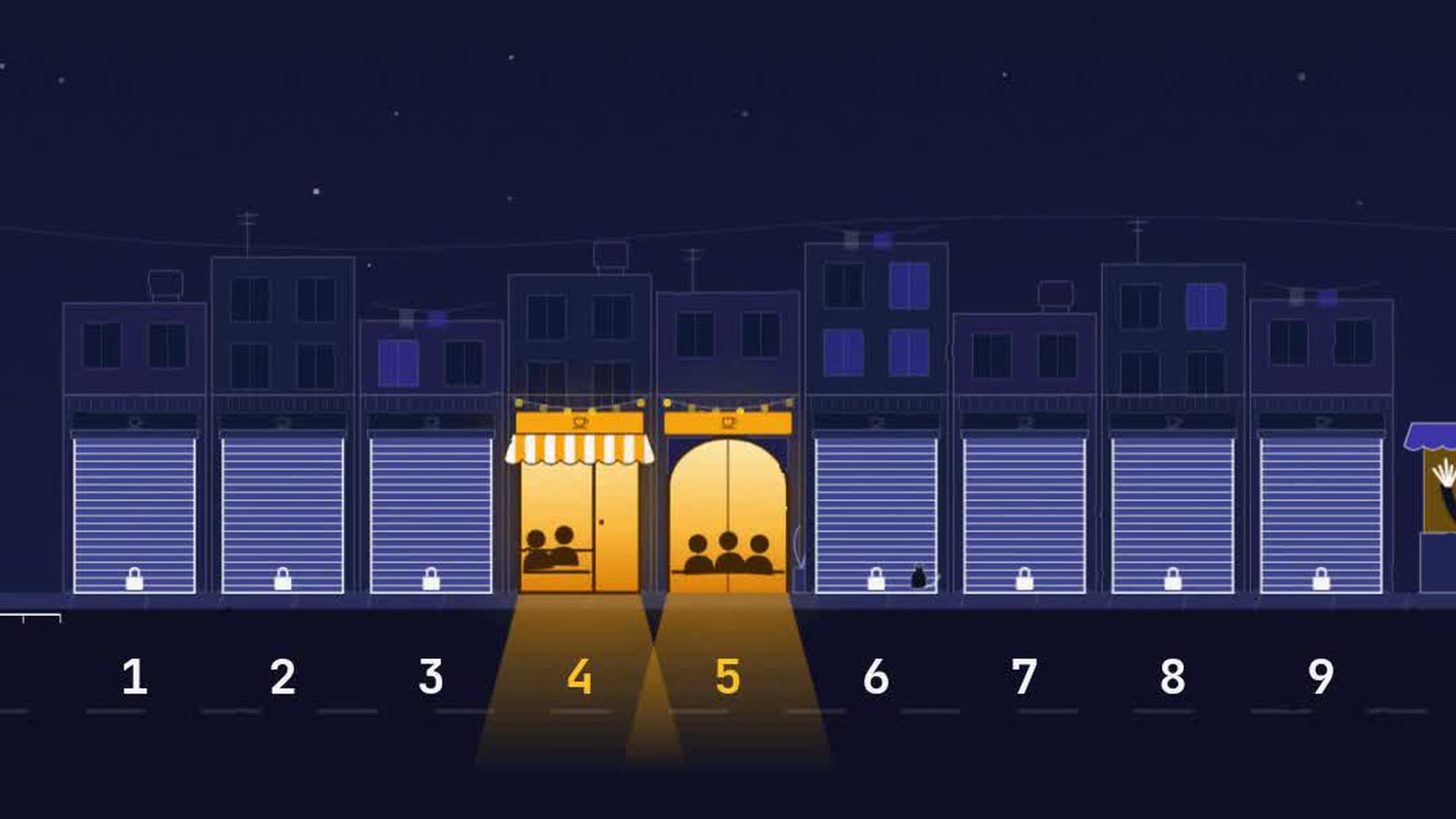
Your cafe idea feels special. So did the three that closed on this road.
Meenal is 31 and works at a bank in Indore. For two years she has wanted to open a small cafe on the road behind her old college. She has a name for it, a menu saved in her phone notes and a quote for a coffee machine. Every Saturday evening she walks past the two cafes on that road, and both are full. To her, the road says one thing: cafes work here.
What the model is
A base rate is the plain count of how things usually go for others who tried the same thing in the same place. Of all the cafes that opened on this road, how many are still open? That count is the base rate for a cafe on this road.
Base rate neglect is skipping that count because your own story is so vivid. Two psychologists, Daniel Kahneman and Amos Tversky, studied it. Your plan is full of detail: the menu, the lights, the name. The count has no detail at all, so it is easy to walk past.
The model asks you to change the order. Start from the count. Then adjust for what is truly different about your case.
Meenal counts the road
One Sunday morning Meenal walks the road again. This time she looks at shutters, not at tables.
First she counts what she always sees: 2 cafes, open.
Then she counts what she remembers. The waffle place. The one with the swing seats. The one that sold cold coffee in glass bottles. 3 shutters down.
Then she asks the man at the corner paan shop, who has watched this road for years. He counts on his fingers, and his list is longer than hers. Some of those shutters have been repainted, and she had stopped seeing them. By his count, 9 cafes have opened on this road. 7 have closed. 2 are open.
So the road was never saying that cafes work here. It was showing her the 2 that are left. The 7 that closed make no noise on a Saturday evening.
Her starting point is now 2 of 9, not two full cafes.
From there she can adjust, honestly. Her menu is different. But is it different in the way that kept the 2 open? That is a separate question, and it has people who can answer it. She can ask both owners what their rent is, and who comes in on a Tuesday afternoon.
The trap
A base rate is where you start, not the answer. 2 of 9 does not say Meenal's cafe will close, and it does not tell her to drop the idea. It is one road, counted from one man's memory.
The second trap is counting the wrong group. Every shop on the road is too wide a group. Cafes exactly like hers is a group of none, which is how an idea gets to feel special. Pick the nearest honest group: cafes, on this road.
One thing to try today
If you have an idea like Meenal's, walk the road this evening. Count two things: how many places like yours opened here, and how many are open now. Ask the oldest shopkeeper on the road, because he remembers what you do not. Write the count as "__ of __" on the first line of your plan, above the name. The first time, it feels a bit like spoiling your own plan.
This is a way to think, not financial, medical or legal advice.
Each Sunday: one mental model and one real decision to try it on. The whole model library is at /models.
One model a week.
Each Sunday: one mental model and one real decision to try it on. One click stops it, and the list is never sold or shared.