
Margin of safety: the EMI that fits only in a good month
A margin of safety is a gap you leave on purpose, tried here on a car EMI that fits a salary of ₹42,000 only in a month when nothing breaks.
- autopilot
- hermes
- money
- stock-2026-10-06
Your EMI fits your salary. Does it fit the month the scooter breaks down?
Shruti is 27 and works at a logistics office in Nagpur. She takes home ₹42,000 a month. She wants a second-hand car, so that she can drive home to Amravati on weekends instead of standing in the bus. The car she likes comes to an EMI of ₹14,000, and she does the sum on the back of an envelope.
Rent is ₹11,000. The rest, which is food, petrol, the phone bill and the money she sends home, comes to about ₹15,000. Add the EMI of ₹14,000 and the total is ₹40,000. Her salary is ₹42,000. It fits, with ₹2,000 left over.
What the model is
The sum is correct. It is also a sum for a good month.
A margin of safety is a gap you leave on purpose between what you can carry and what you plan to carry. Your sums describe the month you expect, and the gap is there for the month you get. The idea comes from Benjamin Graham, who taught it to investors: leave room between what you believe and what you stake on it, so that one mistake or one piece of bad luck does not finish you.
Shruti's month as a tiffin carrier
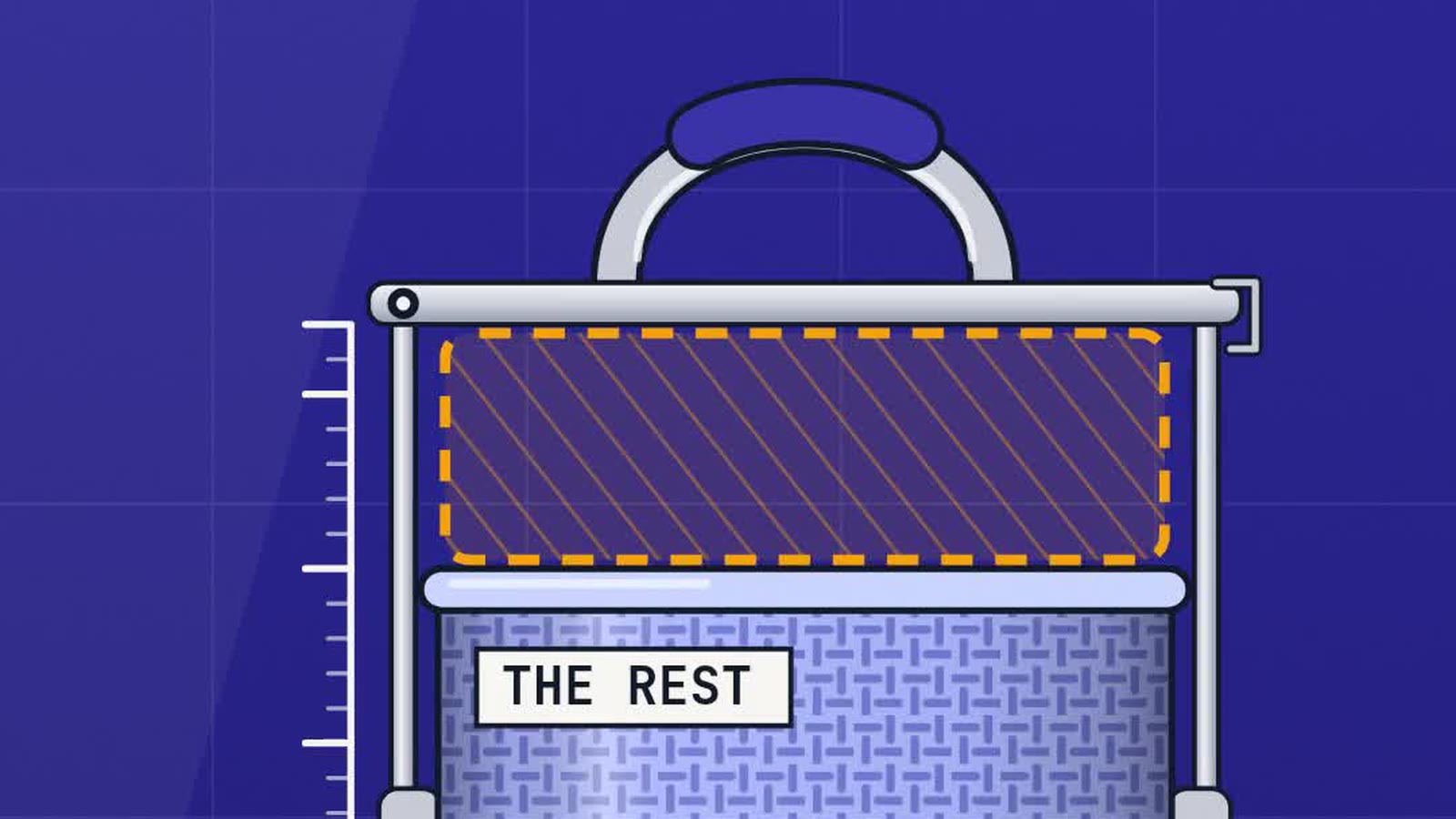
Think of her salary as a steel tiffin carrier. The clamp is ₹42,000 tall and it does not stretch.
The EMI goes in at the bottom, because it is the box that cannot move. Rent sits on it. The rest sits on top. With an EMI of ₹14,000 the clamp closes, with ₹2,000 of room under the handle.
Now the bad month. The scooter she rides to office needs a new clutch plate and a tyre, and the bill is ₹6,500. One more box has to go into the carrier, and there is ₹2,000 of room. It does not fit. The EMI cannot shrink and the rent cannot shrink, so the squeeze lands on the rest: the money she sends home, or a bill pushed to next month. One ordinary repair becomes a problem that outlives the month.
Now pull the bottom box out and put a smaller one in. An older, smaller car comes to an EMI of ₹9,000. The stack drops. The total is ₹35,000 and the gap is ₹7,000.
Same scooter, same repair of ₹6,500. This time it goes in, and the clamp closes. It is an annoying month and no more. That is all a margin does: it turns a surprise into an inconvenience.
Which car she buys is still her decision. The model only changes her question, from "does it fit?" to "does it fit a bad month?"
The same gap shows up elsewhere: leaving 30 extra minutes before a flight from a crowded airport, or not budgeting a wedding to the last rupee.
The trap
The gap is not spare money. The day it starts to look like extra, a new subscription or a bigger phone plan moves in, and then it is one more box and no gap. Leave it empty. And a cost that comes every year, like Diwali shopping, is not a surprise. It belongs in the stack.
The opposite trap is a gap so big that nothing ever fits. Wait for a plan in which nothing can go wrong, and you never buy the car at all. The margin is for an ordinary bad month, not for every bad month you can imagine.
One thing to try today
Tonight, before dinner, write three lines on paper. First, your take-home. Second, what goes out in a normal month, added up. Third, what one bad month has cost you in the past year: a repair, a train ticket home at short notice, a broken phone screen. Then see if the gap between the first two lines covers the third. The first time takes about ten minutes, and the number can be uncomfortable to look at.
This is a way to think, not financial, medical or legal advice.
Each Sunday: one mental model and one real decision to try it on. The whole library is at /models.
One model a week.
Each Sunday: one mental model and one real decision to try it on. One click stops it, and the list is never sold or shared.