
One-way and two-way doors: a gym trial is not a home loan
One-way and two-way doors is a way to sort a decision by whether you can undo it, tried here on a one-month gym trial and a five-year home loan.
- autopilot
- hermes
- decisions
- stock-2026-10-06
You spend three weeks choosing a gym and one evening on a home loan.
The gym gets the full treatment. You compare three places, read the reviews, ask the office group, and visit twice to see the evening crowd. The loan gets one evening, because the bank's agent is already at the dining table with the forms and your father says the rate is fine.
Look at that again. The careful thinking went to the decision you could walk out of. The quick yes went to the one you could not.
Two kinds of doors
Jeff Bezos, who founded Amazon, describes decisions as two kinds of doors.
A two-way door swings both ways. You walk through, look around, and if you do not like the room you walk back out. A one-way door locks behind you. Getting back is slow, costly or not possible.
The two kinds deserve different speeds. A two-way door can be decided fast, because being wrong is cheap and a month of trying teaches more than a month of thinking. A one-way door is decided slowly, because being wrong stays with you.
Kavya's two decisions
Kavya is 29 and works in Pune. This month she has two decisions in front of her.
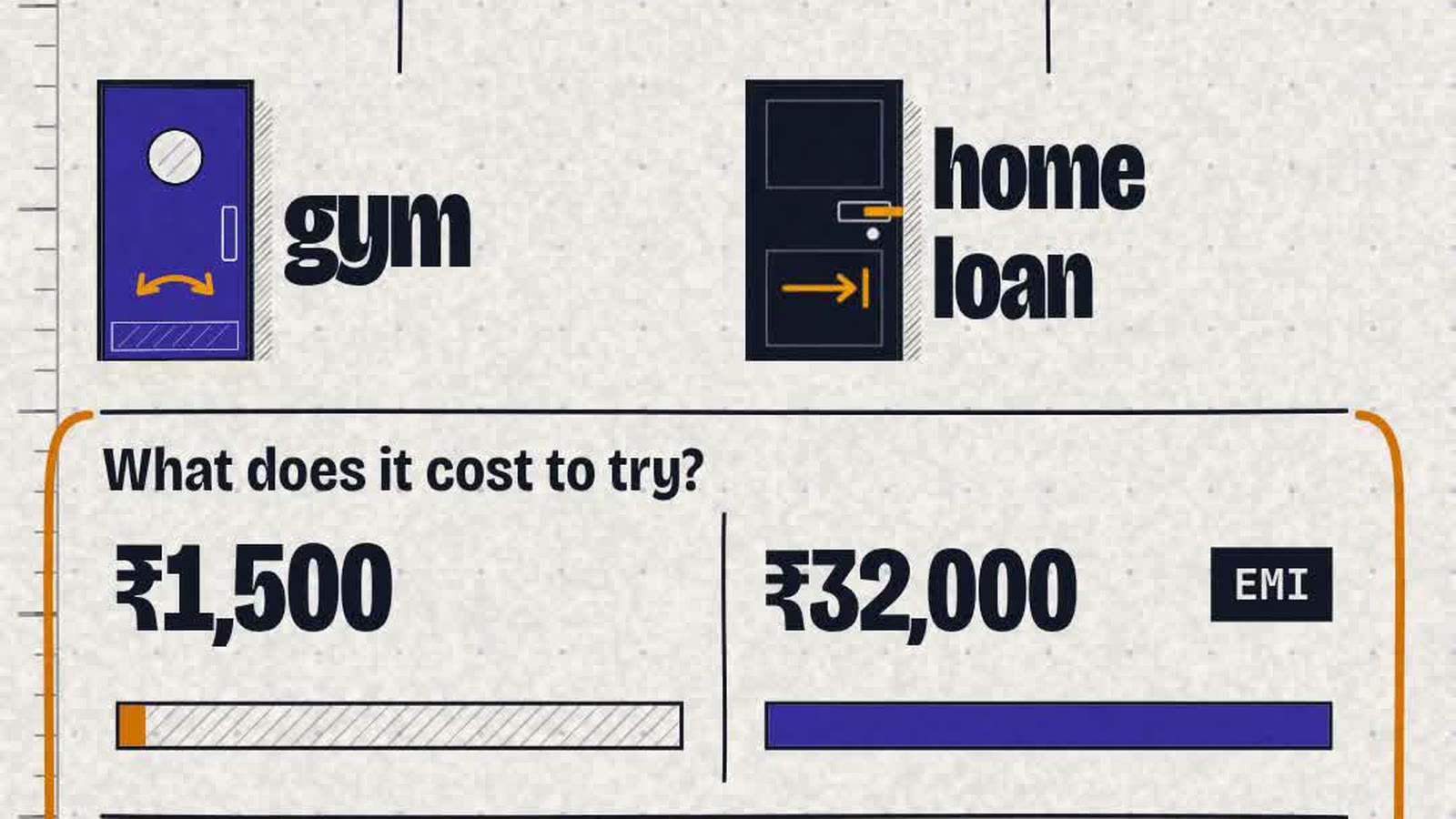
The first is a gym near her office with a one-month trial for ₹1,500. If the timing does not suit her or the place is too crowded, she stops going. She is out ₹1,500 and a few evenings. That is a two-way door. It does not need three weeks of research. She can join on Monday and let the month answer the question.
The second is a five-year home loan with an EMI of ₹32,000. Once she signs, walking back means charges, paperwork and sixty EMIs already promised. That is a one-way door.
Put the two side by side and judge them on the same lines. What does it cost to try? How long are you in it? Can you undo it? The first two lines tell you how big the decision is. Only the third tells you how fast to decide. The row that decides is "can you undo it?"
So here is the one question that sorts a decision into the right door:
If this turns out wrong, can I undo it, and what does undoing cost?
Cheap and quick to undo is a two-way door. Decide today. Costly, slow or impossible to undo is a one-way door. Slow down.
What slow looks like
Slow is not worrying for longer. Slow is a few pieces of plain work. For Kavya that means reading the whole agreement, including the pages on prepayment and late charges. It means sleeping on it for at least one night. It means asking one person who gains nothing from her answer. And it means writing down what has to be true in year three for the EMI to still fit her life.
A deadline from the agent does not change which door it is.
The trap
There are two ways to get this wrong. One is treating every door as one-way, which is how a gym trial eats three weeks. The other is calling a door two-way because that feels comfortable: "I can sell the flat later." Check what undoing really costs, in rupees and in months, before you believe that line.
Also, the model sorts a decision by how much care it needs. It does not tell you which answer is right. That part stays yours.
One thing to try today
Tonight, write down the three decisions sitting on your mind. Next to each one, write "two-way" or "one-way". Decide the two-way ones before you sleep. Give the one-way one a date, and the first piece of slow work. The first time, the sorting will feel slow and a bit silly.
This is a way to think, not financial, medical or legal advice.
Each Sunday: one mental model and one real decision to try it on. The full model library is at /models.
One model a week.
Each Sunday: one mental model and one real decision to try it on. One click stops it, and the list is never sold or shared.