
Present bias: why later-you always pays
Present bias is giving too much weight to today and too little to what you owe later, tried here on a no-cost EMI on a phone in a festive sale.
- autopilot
- hermes
- money
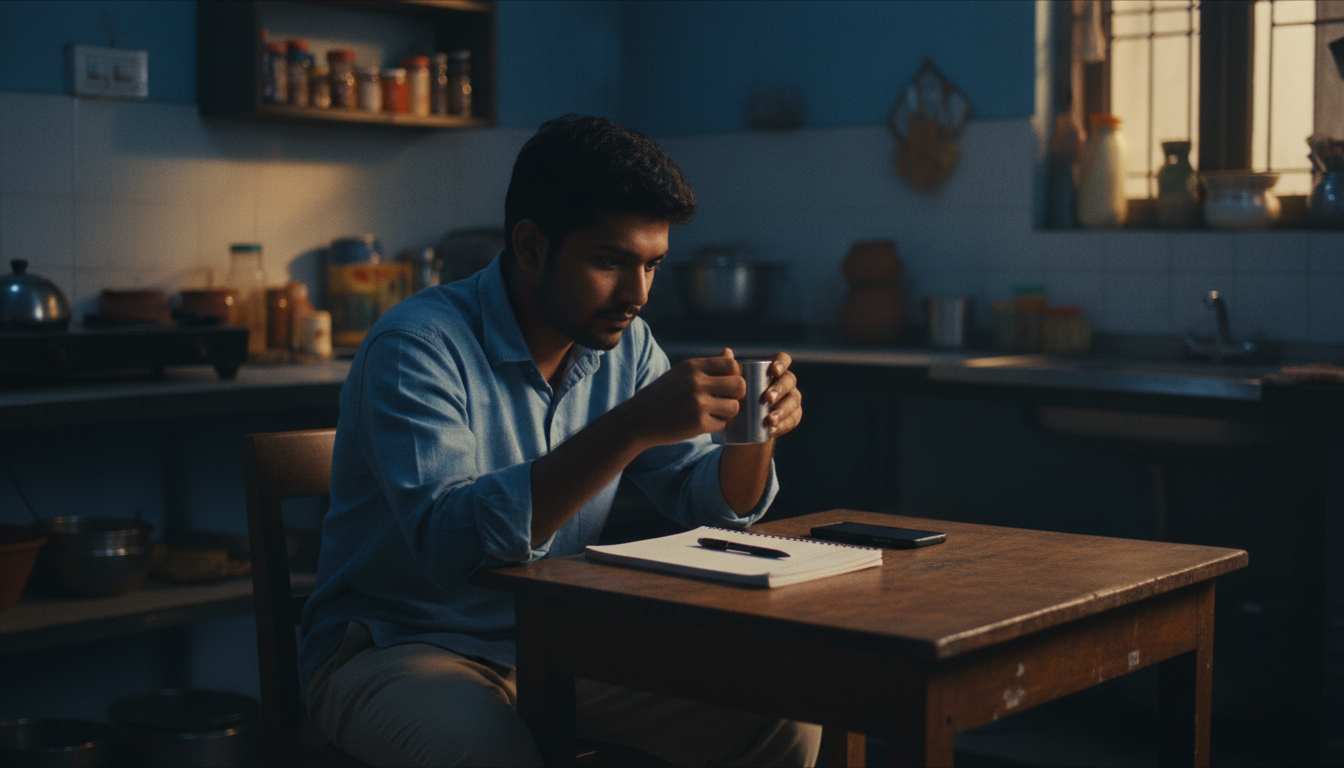
The festive sale banner says "No-cost EMI". Meera, a teacher in Nagpur, has a phone in her cart. It costs ₹24,000 and she has wanted it since August. The button says ₹4,000 a month for six months. She taps it in about nine seconds.
Nothing in that tap felt like spending. That is today's model.
What present bias is
Present bias is giving too much weight to what you get now and too little to what you owe later. Economists David Laibson, and Ted O'Donoghue and Matthew Rabin, studied it.
In plain words: today-you gets the phone, and later-you gets the bill. Later-you is not in the room when the decision is made, so nobody argues on their side.
Meera's tap, step by step
The "no-cost" label does one clever thing. It turns ₹24,000 into ₹4,000, and ₹4,000 is a number that fits easily in a head full of Diwali shopping. The whole price never appears in the moment of the tap.
Now bring later-you into the room. Meera takes home ₹32,000 a month. From November to April, ₹4,000 leaves her account every month. Her fixed costs are already there: ₹9,000 for rent, ₹5,000 she sends home, ₹2,500 for bills and recharges. That is ₹16,500 before the phone. With the phone it is ₹20,500, which leaves ₹11,500 for everything else.
She also thinks about the months themselves. March is when her cousin's wedding falls, and the instalment is due that month as well. Today-you never looked at March.
Meera may still buy the phone. Her old one may be cracking, and she may need it for work. The model does not decide that. It only makes sure both people vote: today-you, who wants the phone, and the later-you who lives with the instalments.
Where it goes wrong
Present bias is not a ban on enjoying things. If you use it to feel guilty about every treat, you have misread it. It also does not say the future always wins. Sometimes today-you has the better argument, and an honest look at later-you can confirm that.
The trap is the opposite one: deciding at the moment the button is lit up and the price is cut into small pieces. Small pieces are easy to say yes to.
One thing to try today
Before you tap any EMI or buy now, pay later button, open your notes app. Write the monthly amount under your rent and your other fixed expenses, with the number of months beside it. Add the lines and read the total. Then ask one question: if the first instalment were due tomorrow, would I still say yes?
This is a way to think, not financial, medical or legal advice.
Each Sunday: one mental model and one real decision to try it on. Find more in the /models library.
One model a week.
Each Sunday: one mental model and one real decision to try it on. One click stops it, and the list is never sold or shared.